New Blog Address
Our website now supports both our informational pages and our blog. You can find us at http://txmg.org/cameron/
Tuesday, June 26, 2012

Friday, June 18, 2010
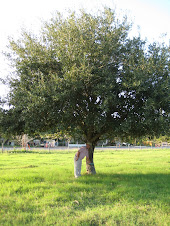
Julian Sauls' Texas Red Oaks

The original selection was from a wild tree somewhere near Breckinridge - that trees location is no longer known. Seed from the Breckenridge tree were planted in Arlington, Texas in the mid 70s. Then seed from the Arlington tree were planted in Tyler in the late 70s. These seedlings came from the Tyler tree. Unfortunately the Arlington plantings were lost to urban development quite a few years ago.
Dr. Sauls was generous enough to give a number of seedlings to the Cameron County Master Gardeners a few months ago. It's time to bump them up to a larger container. In a few years, one should be large enough to transplant into The Arboretum. Hopefully, we'll have another tree that will perform well in our area!
Tuesday, June 1, 2010
June Gardening To-Do List
Time to plant:
Flowers: Mexican heather, ruellia, gerbera daisy, dusty miller, gazania, vinca, night and day purslane, iceplant, moss rose, caladium, coleus, celosia.
Trees: Natives: live oak, anacua, Rio Grande ash, mesquite, retama, wild olive.
Non-native: Cottonwood, crepe myrtle. Buy only container grown plants. But if must buy trees with root balls wrapped in burlap, make sure the tree is green and healthy.
Palms: Summer is the perfect time to plant palms.
Shrubs: bougainvillea, plumbago, manzanita (barbados cherry), lantana, hachinal ,coral bean, yucca, butterfly bush (buddleia) butterfly weed, wild petunia (ruellia), hibiscus. Note: most of these shrubs attract butterflies and hummingbirds to your garden.
Vegetables: Peppers.
Herbs: mint, rosemary, rue, oregano, hierba buena.
Remember:
-When planting trees, shrubs, flowers and herbs use mulch around the base of the plant to conserve moisture.
-Water recently planted materials once or twice a week and water deeply.
-Try to give your tomatoes afternoon shade.
-Keep all flower beds and vegetable garden areas free of weeds so they don’t compete with your plants for moisture and nutrients.
-Add 1 inch of organic matter to your gardens and beds, work it in.
-Regularly check for whitefly and aphids, control with soapy water spray. Be sure to spray under the leaves.
-Check for grubs in your lawn. Brown patches are an indicator. Control with a granular insecticide such as Dursban or Diazinon.
(Information source: Successful Gardening in the Magic Valley of Texas, Dist. VI, Texas Garden Clubs, Inc. and Native Trees- and Native Shrubs-of the Lower Rio Grande Valley, Texas Landscape Uses and Identification, Native Plant Project, PO Box 1433, Edinburg, TX)
Flowers: Mexican heather, ruellia, gerbera daisy, dusty miller, gazania, vinca, night and day purslane, iceplant, moss rose, caladium, coleus, celosia.
Trees: Natives: live oak, anacua, Rio Grande ash, mesquite, retama, wild olive.
Non-native: Cottonwood, crepe myrtle. Buy only container grown plants. But if must buy trees with root balls wrapped in burlap, make sure the tree is green and healthy.
Palms: Summer is the perfect time to plant palms.
Shrubs: bougainvillea, plumbago, manzanita (barbados cherry), lantana, hachinal ,coral bean, yucca, butterfly bush (buddleia) butterfly weed, wild petunia (ruellia), hibiscus. Note: most of these shrubs attract butterflies and hummingbirds to your garden.
Vegetables: Peppers.
Herbs: mint, rosemary, rue, oregano, hierba buena.
Remember:
-When planting trees, shrubs, flowers and herbs use mulch around the base of the plant to conserve moisture.
-Water recently planted materials once or twice a week and water deeply.
-Try to give your tomatoes afternoon shade.
-Keep all flower beds and vegetable garden areas free of weeds so they don’t compete with your plants for moisture and nutrients.
-Add 1 inch of organic matter to your gardens and beds, work it in.
-Regularly check for whitefly and aphids, control with soapy water spray. Be sure to spray under the leaves.
-Check for grubs in your lawn. Brown patches are an indicator. Control with a granular insecticide such as Dursban or Diazinon.
(Information source: Successful Gardening in the Magic Valley of Texas, Dist. VI, Texas Garden Clubs, Inc. and Native Trees- and Native Shrubs-of the Lower Rio Grande Valley, Texas Landscape Uses and Identification, Native Plant Project, PO Box 1433, Edinburg, TX)
Monday, April 12, 2010
Earth-Kind Gardening Seminar
Great info on our upcoming Earth-Kind Landscape and Gardening Seminar!
AgriLife News
AgriLife News
Tuesday, March 9, 2010
Mountain Laurels - What's In A Name?
by Thomas Sullivan, class of 2009
When I first learned of the Texas Mountain Laurel (Sophora secundiflora), I presumed it was related to the Mountain Laurel (Kalamia latifolia), the State Flower of my native Pennsylvania. If these Master Gardner classes have taught me anything, it was not to presume. Research, research, research.
The two mountain laurels share a name and great intrinsic beauty but little else. In some ways, they are direct opposites.


When I first learned of the Texas Mountain Laurel (Sophora secundiflora), I presumed it was related to the Mountain Laurel (Kalamia latifolia), the State Flower of my native Pennsylvania. If these Master Gardner classes have taught me anything, it was not to presume. Research, research, research.
The two mountain laurels share a name and great intrinsic beauty but little else. In some ways, they are direct opposites.
Two examples of the Texas Mountain Laurel


And two examples of the Pennsylvania’s Mountain Laurel:


Family Relatives
The family classifications immediately show how different they are. The Texas Mountain Laurel, while essentially an ornamental, is a member of the legume family, Fabacaeae, which includes important agricultural plants such as soybeans, alfalfa, and peanuts. It is native to the Texas Hill Country and ranges throughout the arid and semi-arid high alkaline soils of Texas, New Mexico, Chihuahua, Coahuila, Hidalgo, and Puebla. Conversely, Pennsylvania’s Mountain Laurel is in the Ericaceae family which is literally “lime-hating”. Its family includes azaleas, rhododendron, blueberries and cranberries. It thrives in the moist acidic suits of the Appalachian Mountains from northern Florida to southern Maine. Unlike the Texas Mountain Laurel which does not tolerate temperatures below 10°, it is extremely cold hardy.
Size, Leaves, and Flowers
Both mountain laurels are spring bloomers, although spring comes significantly later in Pennsylvania. The Texas Mountain Laurel blooms in March and lasts for months. The Pennsylvania variety blooms in late May and peaks in June. By July, it is done.
Each is a shrub or small tree growing 6-15 feet with the Pennsylvanian somewhat larger. There is one on record at 40 feet, but most range less than 20.
Both varieties have gorgeous show-stopping flowers. The Texas Mountain Laurel has purple wisteria-like drop down blossoms with a strong aroma described as grape “Kool-Aid”. Pennsylvania’s Mountain Laurel has large showy clusters of pink/white symmetrical flowers with a deep pink or red center. Both have strong evergreen leaves. They both do best in full sun or light shade although the Pennsylvanian tolerates full shade. Curiously, both are toxic. More on this below.
Propagation and Cultivation
The Texas Mountain Laurel is reportedly tricky to transplant. Container plants may require a year or more to establish themselves and bloom. Seeding appears to be preferred by some authors. Dr. William Welch of Texas A&M suggests planting the seeds while they are still unripe and pink. They should be planted in late June or early July. However, since they do not transplant well, better to plant them where you want them.
Pennsylvania’s Mountain Laurel grows wild through out the Appalachian Mountains and is available commercially in containers. Seeds are small and mature late in the season. At least one author suggested propagation is enhanced by cold-moist stratification.
Toxicity
The leaves of the Texas Mountain Laurel are very poisonous and authors warn parents of small children. This may be connected to the myth generated by the plant’s “other” name, Mescal Bean. The bean is not used in the production of mescal or tequila and does not contain any mescaline. However, it does contain alkaloid cytisne which is chemically related to nicotine. The seeds are toxic if ingested.
The Pennsylvania Mountain Laurel is another story entirely. The leaves, bark, and all green portions of the plant contain andromedotoxin and arbutin which routinely kill horses, cattle, sheep, and deer. It is related to another variety called “sheep laurel” and “lambkill” which, by it very name, certainly indicates its potency.
The Pennsylvanian by birth and Texan by adoption is hard pressed to pick a favorite. So I will just appreciate the extraordinary beauty of each mountain laurel of my homelands.
Acknowledgments:
Horticulture Update: April 2002. Edited by Douglas F. Welsh, Ph.D.
Landscape Horticulture: William C. Welsh, Ph.D. Texas A & M University
Extension Horticulture: Texas Cooperative Extension, Texas A&M University System.
Fabaceae Family: Master Gardeners of the University of Arizona Pima County Cooperative Extension.
USDA National Resources Conservation Service.
Pennsylvania Botanical Society.Connecticut Botanical Society.
Tuesday, March 2, 2010
March To-Do List
Time to plant:
Flowers: ageratum, alyssum, calendula, dianthus, geraniums, kalanchoe, larkspur, Mexican heather, snapdragons, stocks, petunias, vinca.
Trees: Natives: chapote, coma del sur, coyote willow, guayacan, live oak, mescal bean or Texas mountain laurel, retama, Rio Grande ash, tenaza, Texas ebony, Texas sabal Palm.
Shrubs:
Natives: black brush, chapotillo, heart-leaf hibiscus, low croton, manzanita, Mexican trixis, nopal prickly pear, Texas kidneywood, Turk’s cap.
Non-natives (well adapted to Cameron County): dwarf yaupon holly, hibiscus, hybrid lantanas, Japanese boxwood, oleander, pottisporum, shrimp plant, viburnum.
Vegetables: beans (green), lettuce, onions (green), peppers (sweet and hot), radishes, tomatoes, turnips.
Herbs: dill, lavender, all basils, mint, mustard, oregano, parsley, rosemary, spearmint.
Remember:
-Start a weekly check/spray schedule for aphids on roses, hibiscus and other plants. Before spraying check for beneficial ladybugs. ALWAYS read and follow spray label direction for application.
-Till your vegetable garden, add organic matter, pull weeds.
-Add and work in compost to your garden and flower beds.
-Last month to plant roses.
-Take soil samples from your yard and garden for mineral analyses. This is helpful for correct fertilizer applications. Contact the Cameron County Extension Office for details.
-Use mulch when newly planting trees and shrubs.
-Cut Poinsettias to 12 inches above the ground.
-Divide ornamental grasses.
(Information source: Successful Gardening in the Magic Valley of Texas, Dist. VI Texas Garden Clubs, Inc. and Native trees- and Native Shrubs- of the lower Rio Grande Valley, Texas Landscape Uses and Identification, Native Plant Project, P. O. Box 1433, Edinburg, TX.)
Flowers: ageratum, alyssum, calendula, dianthus, geraniums, kalanchoe, larkspur, Mexican heather, snapdragons, stocks, petunias, vinca.
Trees: Natives: chapote, coma del sur, coyote willow, guayacan, live oak, mescal bean or Texas mountain laurel, retama, Rio Grande ash, tenaza, Texas ebony, Texas sabal Palm.
Shrubs:
Natives: black brush, chapotillo, heart-leaf hibiscus, low croton, manzanita, Mexican trixis, nopal prickly pear, Texas kidneywood, Turk’s cap.
Non-natives (well adapted to Cameron County): dwarf yaupon holly, hibiscus, hybrid lantanas, Japanese boxwood, oleander, pottisporum, shrimp plant, viburnum.
Vegetables: beans (green), lettuce, onions (green), peppers (sweet and hot), radishes, tomatoes, turnips.
Herbs: dill, lavender, all basils, mint, mustard, oregano, parsley, rosemary, spearmint.
Remember:
-Start a weekly check/spray schedule for aphids on roses, hibiscus and other plants. Before spraying check for beneficial ladybugs. ALWAYS read and follow spray label direction for application.
-Till your vegetable garden, add organic matter, pull weeds.
-Add and work in compost to your garden and flower beds.
-Last month to plant roses.
-Take soil samples from your yard and garden for mineral analyses. This is helpful for correct fertilizer applications. Contact the Cameron County Extension Office for details.
-Use mulch when newly planting trees and shrubs.
-Cut Poinsettias to 12 inches above the ground.
-Divide ornamental grasses.
(Information source: Successful Gardening in the Magic Valley of Texas, Dist. VI Texas Garden Clubs, Inc. and Native trees- and Native Shrubs- of the lower Rio Grande Valley, Texas Landscape Uses and Identification, Native Plant Project, P. O. Box 1433, Edinburg, TX.)
Monday, February 1, 2010
February To-Do List
Time to plant:
Flowers: petunias, ice plant, ruelia (Mexican petunia), Mexican heather, kalanchoes, geraniums, impatients, Gerbera daisies, alyssum, salvia.
Trees: Texas ebony, anaqua, wild olive, live oak, retama, colima, brazil, western soapberry.
Shrubs: Native: Trecul’s yucca, desert yaupon, coral bean, hachinal, black brush, cenizo, chilipiquin, Texas lantana, oregano.
Non-native well adapted to South Texas: Cape honeysuckle, fire cracker, Mexican firebush (Hamelia) salvias, hibiscus, bougainvillea, gardenia, oleander.
Vegetables: broccoli, carrots, melons (cantaloupe and honeydew), peppers (sweet), squash, tomatoes, watermelons.
Herbs: anise, basil, catnip, garlic, mints, parsley (curly and Italian), rue, thyme.
Remember:
- Harvest of some cool season vegetables.
-Don’t put away your freeze protection materials just yet, wait another month.
-Plant roses this month.
-Feed your roses with a systemic insecticide and rose food.
-Acid fertilizer should be applied to acid loving plants.
-Prepare soil for vegetable and flower gardens.
-Use mulch to cover the soil after planting trees, shrubs and bedding plants.
Flowers: petunias, ice plant, ruelia (Mexican petunia), Mexican heather, kalanchoes, geraniums, impatients, Gerbera daisies, alyssum, salvia.
Trees: Texas ebony, anaqua, wild olive, live oak, retama, colima, brazil, western soapberry.
Shrubs: Native: Trecul’s yucca, desert yaupon, coral bean, hachinal, black brush, cenizo, chilipiquin, Texas lantana, oregano.
Non-native well adapted to South Texas: Cape honeysuckle, fire cracker, Mexican firebush (Hamelia) salvias, hibiscus, bougainvillea, gardenia, oleander.
Vegetables: broccoli, carrots, melons (cantaloupe and honeydew), peppers (sweet), squash, tomatoes, watermelons.
Herbs: anise, basil, catnip, garlic, mints, parsley (curly and Italian), rue, thyme.
Remember:
- Harvest of some cool season vegetables.
-Don’t put away your freeze protection materials just yet, wait another month.
-Plant roses this month.
-Feed your roses with a systemic insecticide and rose food.
-Acid fertilizer should be applied to acid loving plants.
-Prepare soil for vegetable and flower gardens.
-Use mulch to cover the soil after planting trees, shrubs and bedding plants.
Subscribe to:
Posts (Atom)